Executive Summary
Why the OSCE: Because Türkiye, as an OSCE participating State, has undertaken politically binding human-dimension commitments. The Organization also has explicit tools (e.g., the Moscow Mechanism) to address serious and systemic violations that undermine regional security and the rule of law.
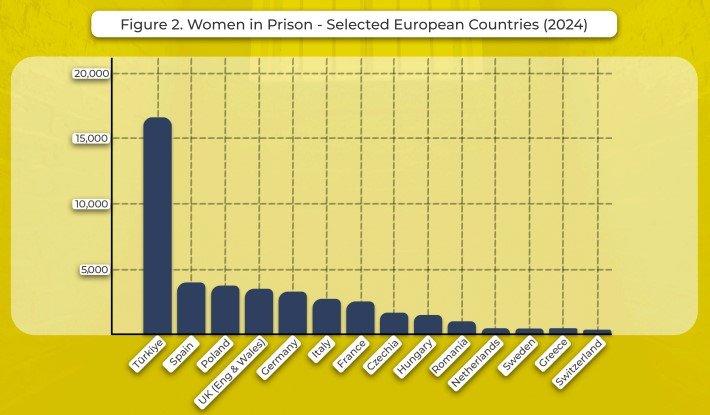
What we see: Since 15 July 2016, large-scale terrorism-related proceedings have swept up women, including pregnant women, new mothers, and children. More than 127,000 individuals – including over 10,000 women and hundreds of children under six – have been detained in Türkiye under expansive “terrorism” charges. These detentions often lack judicial oversight, rely on secret evidence, and include pregnant women, new mothers, and minors. Documented conditions and practices by the UN, NGOs, and survivors constitute clear violations of the Universal Declaration of Human Rights (UDHR), the International Covenant on Civil and Political Rights (ICCPR), the Convention on the Rights of the Child (CRC), and the Convention on the Elimination of All Forms of Discrimination Against Women (CEDAW).
• Torture and Ill-Treatment – UN and NGO sources report beatings, threats (including electric shocks, sexual threats, and coerced statements) in police custody and prisons; investigations remain ineffective.
• Denial of Medical Care – Monitoring highlights gaps in antenatal and postnatal care, restraints during medical procedures, and broader deficiencies in health services for women in detention.
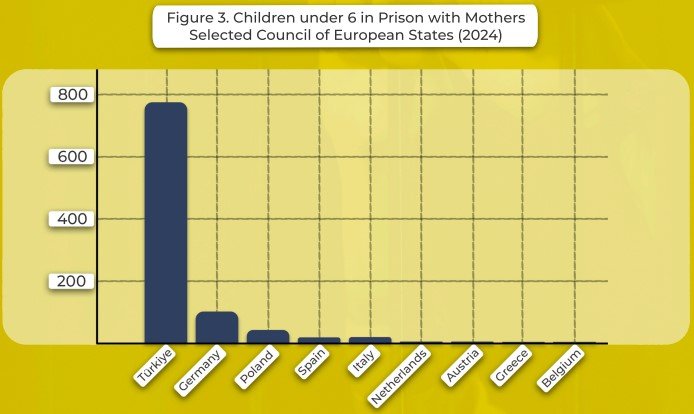
• Child Rights Violations – Children under six continue to live in prison with their mothers in large numbers: 780 (CoE SPACE I, 2024) and 822 (NGO-based, 2025). As of September 2025, 822 children under six were documented (434 aged 0–3; 388 aged 4–6, CİSST). Teenage girls have been interrogated without legal or parental presence for up to 16 hours without food.
• Opacity – Access to consistent, disaggregated, and up-to-date official data on pregnant women and infants in custody is limited. NGOs flag data gaps that obstruct oversight.
1 | Documented Violations
CRC (Arts. 3, 9, 37) – Best interests of the child; protection from arbitrary or unlawful deprivation of liberty; family unity.
ICCPR (Arts. 7, 9, 10) – Prohibition of torture and cruel, inhuman or degrading treatment; protection from arbitrary detention; humane treatment of persons deprived of liberty.
CEDAW (Arts. 2, 12) – Non-discrimination; access to appropriate healthcare, including maternity services, without delay or restraint.
ECHR (Arts. 3, 5, 8) – Prohibitions against torture/ill-treatment; liberty and security; respect for private and family life—regularly engaged by the above practices.
2 | Legal Framework and Breaches
• Total number of women detained between 2016 and 2025: ~9,700
• Children under six detained with mothers: 780 (CoE SPACE I, 2024); 822 (CİSST, Sept 2025) the trend remains elevated compared to previous years.
• Teenage girls detained without representation (May 2024): 14
• Documented cases of sexual assault/torture: at least 50 (OHCHR)
• Systemic risk backdrop: UN CAT (July 2024) flagged ongoing concerns about torture/ill-treatment; AIDA/ECRE (2024 update, publ. July 2025) describes continuing protection gaps.
• Prison population context: CoE SPACE I (2024) situates Türkiye among Europe’s highest prison-population rates, including women and minors.
4 | Human Impact
A toddler’s first steps taken in a concrete corridor; anew mother transported in
restraints for delivery a child’s early years spent behind bars—these are not isolated
events but recurring patterns, grounded in statistics and findings.
5 | Calls to Action for OSCE and International Partners
• Urgent releases: Ensure immediate release of pregnant women, postpartum women, infants, and minors held on non-violent charges or where detention is not strictly necessary and proportionate.
• Health guarantees: Mandate uninterrupted antenatal/postnatal care; prohibit restraints during labour; ensure independent medical access.
• Accountability: Support independent, international inquiries into all torture/ill-treatment allegations; ensure effective, prompt, impartial investigations.
• Procedural safeguards for children: Ban interrogation or detention of minors without legal counsel and family presence; prioritize non-custodial alternatives consistent with the CRC.
• Reparations: Provide survivors and families with rehabilitation and psychosocial support, consistent with UN CAT standards.
6 | Recommended OSCE Engagement
Deploy OSCE mechanisms: Encourage participating States to consider steps up to and including the Moscow Mechanism should credible, systematic concerns persist.
Joint advocacy: Coordinate statements with UN Special Procedures; mainstream women- and child-protection concerns across OSCE human-dimension work.
Visibility & follow-up: Circulate executive summaries to delegations; maintain a standing agenda item in HDIM follow-up.
Transparency ask: Urge Turkish authorities to restore regular, disaggregated public reporting on women and children in custody and to facilitate unhindered access for monitors.
Conclusion
The detention of women and children under these conditions in Türkiye is a grave violation of international law and a moral test for the international community. OSCE, alongside UN partners, must act decisively to uphold human dignity and the universality of rights.
Why the OSCE Should Act on Türkiye (Mandate & Relevance)
• Escalating risks to women and children: Documented detention, ill-treatment, and lack of safeguards for pregnant women, mothers with infants, and minors indicate an urgent protection gap. Without OSCE-led pressure and scrutiny, more women and children will be exposed to harm, with intergenerational consequences. [9][10][11]
• Regional norm-setting & the ‘model’ effect: Democratic backsliding and normalization of violations risk exporting repressive norms across neighbouring regions, undermining OSCE human-dimension commitments. [14][15][16]
Compelling reasons for immediate OSCE attention (Impact Beyond Türkiye)
• Participating State obligations: Türkiye is one of the OSCE’s 57 participating States; human-dimension commitments are politically binding and central to comprehensive security. [1][2]
• Istanbul Charter (1999): States affirmed that respect for human rights and fundamental freedoms is essential to security; engaging Türkiye aligns directly with that vision. [3]
• Established tools to address violations: The OSCE can deploy fact-finding through the “Moscow Mechanism” and other human-dimension mechanisms when serious concerns arise, as used repeatedly in recent years. [4][5]
• Security implications beyond borders: ODIHR human-dimension mechanisms, including the Moscow Mechanism, exist precisely for patterns like those documented here (e.g., torture, arbitrary detention) which weaken rule of law, fuel displacement, and erode regional security. [12]
• Complementarity with UN and Council of Europe: OSCE action complements UN treaty body findings and supports implementation of obligations already highlighted for Türkiye by UN mechanisms. [9][10]
Notes on Evidence
•UN OHCHR documented widespread violations during the state of
emergency in 2016–2018, including arbitrary detention and
torture.[9]
•Human Rights Watch reported renewed torture and abductions in
police custody in 2017.[11]
•UN Committee against Torture reviewed Türkiye in July 2024;
concerns and recommendations are reflected in its concluding
observations.[10]
•As of late 2025, NGO reporting based on CİSST data indicates 822
children under six living with their mothers in prison; Turkish
officials have also reported similar figures (e.g., 706) at different
times.[7] [13]
Prepared by
Justice & Human Rights Foundation (JUSHR)
References
- OSCE – Participating States: https://www.osce.org/participating-states
- OSCE – Document of the Copenhagen Meeting (1990):
https://www.osce.org/files/f/documents/9/c/14304.pdf - OSCE – Istanbul Document 1999 / Charter for European Security:
https://www.osce.org/files/f/documents/4/2/17502.pdf - OSCE/ODIHR – Human Dimension Mechanisms (incl. Moscow Mechanism):
https://www.osce.org/odihr/human-dimension-mechanisms - OSCE – Moscow Mechanism (Permanent Council update):
https://www.osce.org/permanent-council/567358 - https://wp.unil.ch/space/files/2025/07/250715_rapport-space-i-2024_compressed.pdf
(p. 41-42) - https://cisst.org.tr/
- https://www.prisonstudies.org/sites/default/files/resources/downloads/world_female_i
mprisonment_list_6th_edition.pdf - OHCHR – Report on human rights in Turkey during state of emergency (20 March
2018):
https://www.ohchr.org/en/press-releases/2018/03/turkey-un-report-details-extensive-h
uman-rights-violations-during-protracted - UN Geneva – Committee against Torture – Türkiye review & concluding
observations (July 2024): https://digitallibrary.un.org/record/4059747 - Human Rights Watch – In Custody: Police Torture and Abductions in Turkey (2017):
https://www.hrw.org/report/2017/10/12/custody/police-torture-and-abductions-turkey - AIDA/ECRE – Türkiye Country Report (2024 update, July 2025):
https://asylumineurope.org/wp-content/uploads/2025/07/AIDA-TR_2024update.pdf - Turkish Minute – 759 children under six in Turkish prisons (Nov. 19, 2024):
https://www.turkishminute.com/2024/11/19/759-children-under-6-live-turkish-prisonas-incarceration-rates-soar/ - Brookings – The rise and fall of liberal democracy in Turkey: implications for the
West (2019):
https://www.brookings.edu/articles/the-rise-and-fall-of-liberal-democracy-in-turkey-i
mplications-for-the-west/ - Middle East Institute – The ‘Turkish Model’ in the Middle East (2012):
https://www.mei.edu/publications/turkish-model-middle-east-0 - BTI Transformation Index – Türkiye Country Report 2024/2025:
https://bti-project.org/en/reports/country-report/TUR - https://stockholmcf.org/new-low-in-erdogans-crackdown-minors-prosecuted-as-terror
ists-for-socializing-with-peers
Figures
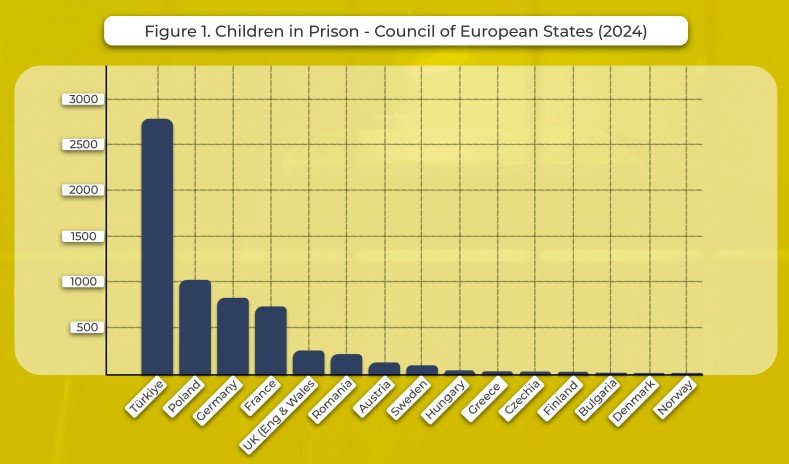
● Figure 1: Number of minors (under 18) in prison across Council of Europe states
(SPACE I, Jan 2024). Türkiye holds the highest number.
● Figure 2: Children under six living in prison with their mothers (selected Council
of Europe states, Jan 2024). Türkiye’s number is dramatically higher than others.
Statistics for Germany were taken from: BAG-S summary page:
https://bag-s.de/mutter-kind-vollzug-in-deutschland-2
● Figure 3: Number of women in prison in selected European countries
(2023/2024). Türkiye has by far the largest female prison population.