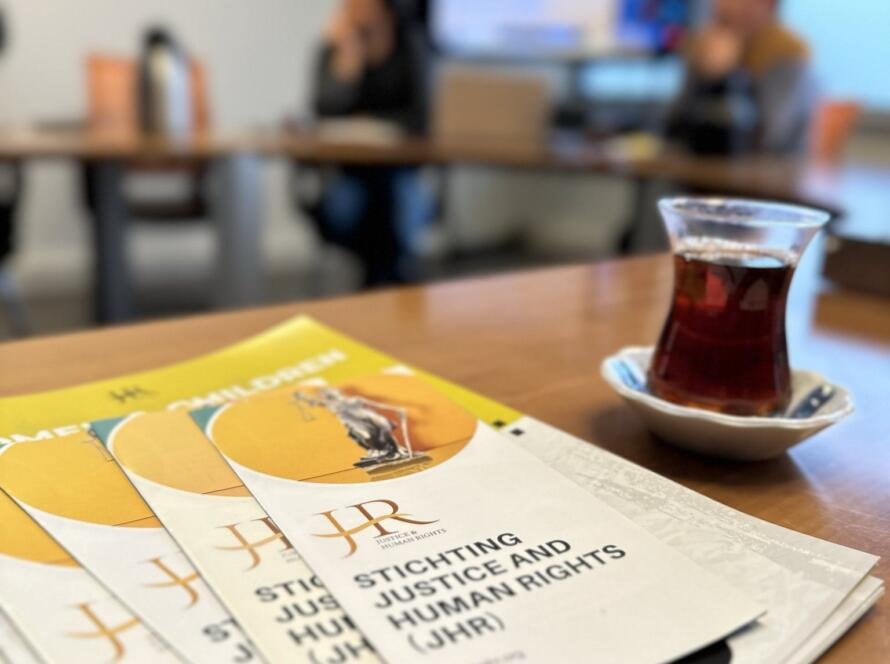
On 6 October 2026, our Foundation, Stichting Justice and Human Rights, raised concerns about human rights violations and continuing injustices in Türkiye at the 2026 Warsaw Human Dimension Conference, organised by the OSCE Office for Democratic Institutions and Human Rights (ODIHR) under the Swiss OSCE Chairpersonship.
The conference brought together delegations from across the OSCE region, representatives of diplomatic missions, international human rights organisations, civil-society organisations, academics and experts. We presented our assessments of the human rights situation in Türkiye and our expectations regarding the implementation of OSCE human dimension commitments.
We shared thematic reports and information brochures prepared by our volunteers using judgments, statistical data and assessments from international institutions and independent monitoring bodies. Through these publications and our interventions, we sought to draw attention to the need for effective remedies, accountability and sustained international dialogue.
Our Contributions to the Plenary Sessions
Our representatives delivered brief statements during three plenary sessions, with each intervention addressing human rights concerns in Türkiye within the thematic framework of the respective session.
Plenary Session 3: Fundamental Freedoms I – Wednesday, 7 October 2026
Referring to judgments of the European Court of Human Rights (ECtHR) and assessments by the European Commission, we highlighted concerns about the definition and application of Türkiye’s anti-terrorism legislation and called for its alignment with European Union standards, the rule of law and the principle of individual criminal responsibility.
We also highlighted the scale of applications concerning Türkiye pending before the ECtHR. The Court’s statistics cited in our conference documentation recorded 22,600 pending applications concerning Türkiye as of 30 June 2026, accounting for 40.0% of the Court’s pending applications.
Plenary Session 6: Democratic Institutions – Monday, 12 October 2026
In the discussion of democratic institutions, electoral integrity, freedom of expression and the safety of journalists, we raised concerns about political and judicial developments affecting democratic governance in Türkiye. We referred in particular to judicial proceedings and detention measures involving elected local officials, including the continued pretrial detention of Istanbul’s elected Mayor, Ekrem İmamoğlu, and discussed developments involving local administrations in Mersin and İzmir.
We underlined the importance of democratic representation, political pluralism, judicial independence and the ability of elected officials to exercise their mandates in accordance with the law.
Plenary Session 8: Fundamental Freedoms II – Tuesday, 13 October 2026
In the session on media freedom, freedom of expression and journalists’ safety, we addressed the pressures facing independent media organisations and journalists in Türkiye. We stressed the need to safeguard independent reporting and ensure that journalists can work without unlawful political or administrative interference.
Reported developments involving Halk TV in Istanbul on 14 October 2026, after the plenary session, including the suspension of live broadcasts and the appointment of a trustee, were subsequently cited as further grounds for concern regarding media freedom.
International Engagement and Bilateral Meetings
Throughout the conference, we held bilateral meetings with representatives of OSCE participating States, OSCE officials, diplomatic representatives, civil-society organisations, academics and human rights experts. These meetings enabled us to exchange information on human rights concerns in Türkiye and develop channels for continued dialogue.
A significant outcome was the expansion of our international communication network. We established contacts through which future reports, research and documentation can be shared directly with relevant delegations and international human rights organisations, supporting sustained engagement beyond the conference.
Recommendations to OSCE Participating States and ODIHR
We called for full and timely implementation of ECtHR judgments, stronger judicial independence, effective fair-trial safeguards and alignment of Türkiye’s anti-terrorism framework with European Union and international human rights standards. We encouraged OSCE participating States and ODIHR to raise three priorities with the Turkish authorities:
Compliance with OSCE human dimension commitments. Türkiye should honour its commitments concerning fundamental freedoms, human rights, judicial independence and the rule of law.
Independent and transparent investigations. Allegations of human rights violations, including those linked to prosecutions and detention, should be investigated promptly, impartially and transparently by independent competent bodies, with opportunities for meaningful civil-society scrutiny.
Independent monitoring of fair-trial safeguards. Independent civil-society organisations, bar associations and human rights observers should be able to monitor judicial proceedings and assess access to counsel, equality of arms, the presumption of innocence and effective remedies.
We encourage continued OSCE/ODIHR engagement with Türkiye and transparent follow-up on the implementation of relevant human dimension commitments. Our Foundation remains committed to evidence-based documentation, independent monitoring, constructive international dialogue and cooperation with organisations working to protect fundamental rights.
We extend our appreciation to the volunteers whose contributions made our thematic reports, information materials and conference activities possible.
Combating terrorism and protecting human rights are not competing objectives. Respect for the rule of law is essential to both.